

Brain-Derived Computing Zeros in on AI Software
Brain-inspired computing has always been a "five years away" lab project. A startup in San Francisco hopes to change the narrative. Its first product is not a piece of hardware but software.

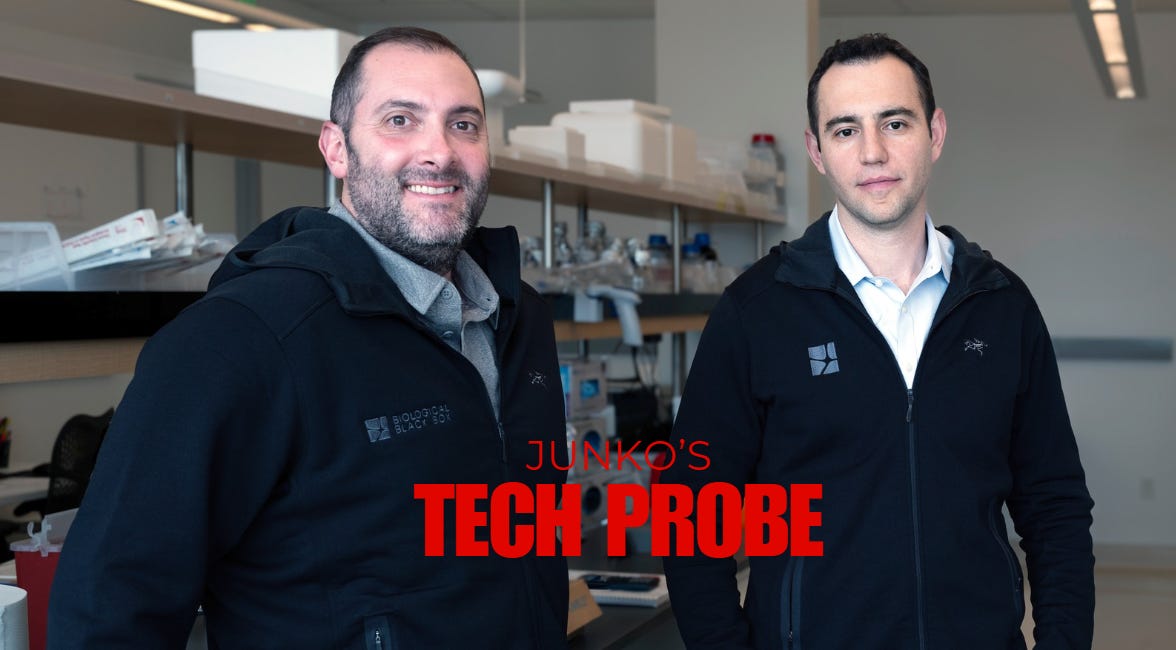
Brain-inspired computing is a long-established engineering field, going as far back as the 1940s. The idea of emulating the human brain’s architecture, or at least the actions of individual neurons, has attracted neuroscientists and computer scientists seeking radically new ways to look at computing.
R&D activities on biological computing using actual neurons, or neuromorphic computing using hardware or software inspired by neurons, both of which draw inspiration from brains, began well before ChatGPT muscled Artificial Intelligence into the vernacular.
Nevertheless, brain-inspired computers have never become broadly available in the commercial market, nor have they rivaled the performance of software and hardware built by established computing. That may be about to change.
Today, despite its sudden ubiquity, AI is facing a backlash of fear and controversy. Scientists, engineers and the public alike have noticed with alarm AI’s voracious and expanding appetite for compute power. The future of AI may depend not upon further scaling, with even more GPUs and even more power, but upon finding ways to reduce the amount of computing necessary to achieve a quality result.
And one of the best arguments for neuromorphic computing is the billion-fold difference in energy efficiency between brains and datacenters. The human brain has been measured to run on about 20 watts. A massive GPU-infested datacenter processing an LLM mimicking human cognition needs megawatts to gigawatts. This disparity exists in part because of the brain’s slow, non-linear, event-driven spiking, compared to a computer’s frenetically continuous clock-driven operation, in which sometimes every node in a circuit can change on every clock cycle.
Not only is scaling up to greater power causing public outcry, but computer scientists themselves are increasingly skeptical that larger, more complex models will improve the problems with today’s models: issues like hallucinations or poor-quality long videos.
A further roadblock looming across the future of AI is the learning problem. Today AI models are trained at great expense in datacenters. They cannot learn continuously from experience. So when a model encounters a new environment, or even a novel prompt, designers must collect masses of data on the new situation and retrain the model. Not only is this a slow, expensive, and necessarily infrequent process, but there is worse news. As models are retrained, they can increasingly and unpredictably forget things they already knew, producing hallucinations where once they produced useful output.
In contrast, humans learn quickly—often from a single experience and without outside guidance. And as we learn more, the experience enriches, not destroys, our existing knowledge. We don’t forget what a pedestrian looks like when we learn about a detour sign. Nor do we lose track of objects or perspective in long video sequences. These skills are still not well understood.
Brain-derived computing may hold some solutions.
Software launch
Against this backdrop, The Biological Computing Co. (TBC), a four-year old San Francisco-based startup, is seizing the moment with an effort to bring to fruition a biological computing platform. But unlike the trail of failed neuromorphic predecessors, TBC’s first product and its path to revenue, slated for launch this year, is not a piece of hardware. It’s software.
The startup is applying the principles of brain-inspired computing to AI software, such as generative video, computer vision, and AI models. TBC is promising to deliver software tools that, for instance, help advertising agencies or marketing companies create higher quality AI-generated video faster and cheaper. They are promising a difference users will pay for.
During our recent interview, Alexander Ksendzovsky, TBC’s co-founder and CEO, made clear that real-time biological computing remains the company’s core and eventual ambition. TBC does, in fact, build and operate silicon chips with living neuron cells on them. But the chips are not used for computing.
Instead, TBC studies the behavior of the neurons on these chips to derive algorithms that resemble what the neurons are doing. Then they code up these algorithms and insert them as adapters into existing AI models at key points. In effect, these adapters modify the data flowing through the AI system’s machine-learning network to make the AI system’s tasks of inference and memory much easier.
That can improve both efficiency and quality of results. Users can plug in these neuron-derived adapters and reap the benefits in speed, power consumption, or quality of results, without redesigning or retraining their original model or altering the way they use the AI tools.
Who’s on the team?
Neither TBC’s co-founders, Ksendzovsky. nor COO Jonathan Pomeraniec is a computer scientist. They are neurosurgeons and neuroscientists. They still do brain surgery, but only sporadically these days.
The two co-founders have been tracking the development of biological computing for 20 years. They have teamed with John Wittig, trained as a computer engineer, chip designer, and neuroscientist. Wittig is TBC’s vice president of products and engineering.
Wittig brings to TBC his solid hardware expertise. To earn his PhD, he built microchips that model the brain and wrote software to model how brain cells process information.
Asked about his research focus, Wittig said that he’s been working to understand “the basis of the computation that allows us to interact with the world.”
How does it work?
The startup has acknowledged that its work stands on the shoulders of the accomplishments of many brain computer interface companies. Although the commercial market remains largely devoid of brain-inspired computers yet, the field’s R&D activities have never slowed. Ksendzovsky said. “Neuroscience has already massively flourished, which led to our much better understanding of how neurons process information.”
During the interview, Ksendzovsky showed off TBC’s chip. The chip shown to us did not have brain cells on it, but the company has already built brain cells on such a chip. That working chip has helped the team learn fundamental principles about how the brain processes data.
Today, “we can grow neurons long enough, we have enough electrodes, we have computational tools to be able to understand brain signals,” explained Ksendzovsky. With this arsenal of neurons on the working chip, the company, over the last four years, has gained “incredible access to how brain cells actually compute information.”
The team uses the electrode interface on the chip to stimulate the neurons on the chip’s surface. For example, said Ksendzovsky, “Assume the information is a picture of my face. The pixels correspond to the electrodes, and we can send that pixel information as currents, through the electrodes and into the biological network.”
He went on, “Then we can record the responses of the neurons, thus allowing us to understand and model mathematically how brain cells process an image, or any data that we put into the dish.”
Add this processing into transformer architecture, for example, and it enables an AI model to look a little more biological, noted Ksendzovsky. “It’s not a complete redo of the hardware,” but making the software “slightly more biological … actually leads to incredible improvement in efficiency,” in terms of training and generating video.
Proof point
TBC’s first proof of concept was the performance of video-generation models. Today’s AI-based video generation can create quite impressive short sequences. But longer sequences get increasingly inaccurate and can eventually lose track of objects or become meaningless blurs. Adding their neuro-derived adapter into the AI model, “we generated five to 10 times more video … at a higher quality.” TBC succeeded by simply “making the video generation algorithms a little bit more biological” by incorporating TBC’s adapters and learning rules, noted Ksendzovsky.
Today, TBC’s team is doing targeted experiments to exploit some fundamental principles in biology. “We observe them, mathematically model them, and apply them in a very directed way toward whatever problem we’re trying to solve.”
Claiming an accelerated discovery loop the company has pulled off, the CEO remarked, “In just a short period of time, we’ve gotten incredible progress in terms of what we’re able to do.”
Source: The Biological Computing Co. (TBC)
How to commercialize it
The issue then comes down to how TBC plans to commercialize its software. What’s the business model?
People can access video generation models that have been enhanced and optimized by using TBC’s adapters, “either through the marketplace or through an API that goes to TBC’s website,” explained the CEO.
Typically, TBC starts the optimization process by using a model made available on open source. It can also work on a closed source model provided by a commercial client, explained Wittig. TBC applies the company’s own transformation to the model, which remains closed.
In short, the only access is through APIs. People anywhere in the world, at any time, can access TBC optimized inference models in an online marketplace, paying the marketplace directly per token and per model usage, Wittig explained. “Then we share a portion of that revenue.”
TBC’s COO Pomeraniec stressed, the key advantage of the startup’s product is that it plugs and plays into current AI workflows. “People don’t have to change their behavior” to adopt TBC’s software, even though it was built on brain-inspired computer, a radically different compute paradigm. “The end user doesn’t have to change anything.”
TBC raised a $25 million seed led by Primary Ventures in March.
— Additional reporting by Ron Wilson.
Junko, if I didn't know you like to get things right, I wouldn't pick this nit, but you do, so: " a computer’s frenetically continuous clock-driven operation, in which sometimes every node in the system can change on every clock cycle." cannot possibly be true. Consider all the caches in the CPU -- these are activated on a line-by-line basis. Also consider that all modern CPU's (that I know of) all perform clock-gating, where additional logic is provided that watches for opportunities to NOT clock a functional block, specifically to save power. Your basic point is essentially correct, however, that a conventionally-clocked CPU is apt to routinely clock more circuits than are necessary to "get the right answer", despite determined efforts to avoid that, a fate not shared by spiking communications schemes like our brains, or for that matter, asynchronous logic.